When Bitly Cut Their Free Tier, Marketers Came to Us — Here's What We Learned
← Back to BlogPart of: The 301.Pro Alternative to Bitly
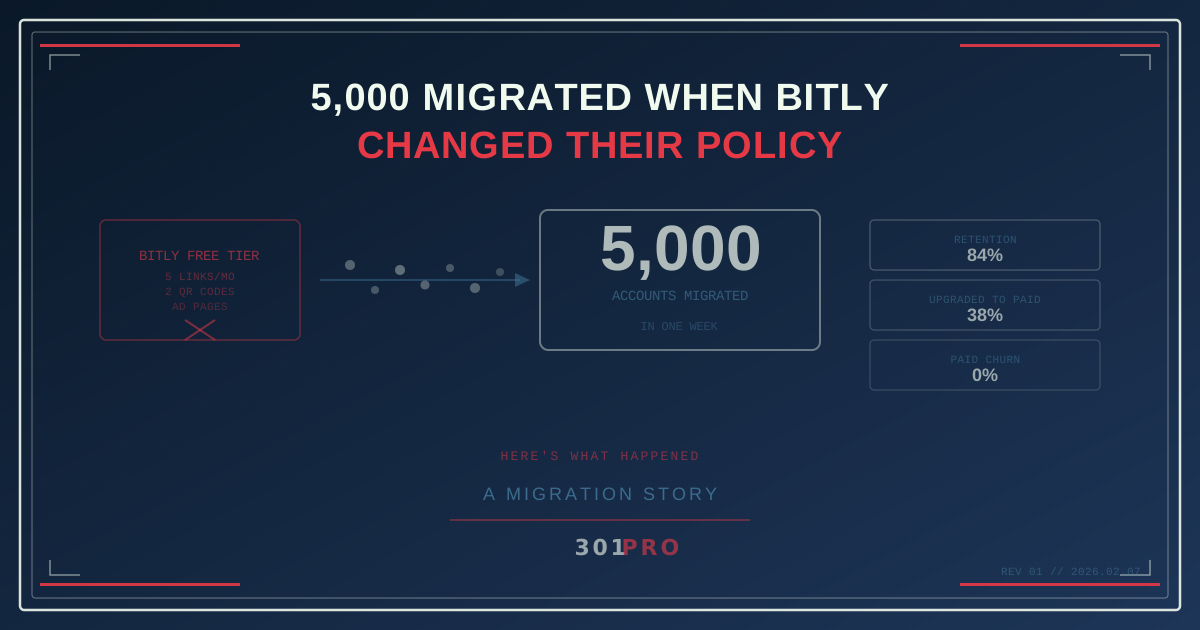
The Day Bitly Changed Everything (Again)
It was a Tuesday. Because it’s always a Tuesday.
Bitly announced they were cutting their free tier — again. Free users dropped to 5 links per month (per Bitly’s own free-plan page, as of June 2026). Five links. Per month. That’s one link per business day, assuming you don’t work Mondays. Or Fridays.
The internet did what the internet does: it panicked. Marketing Twitter lit up. Reddit threads multiplied. “What do I use now?” became the most-asked question in every Slack community we lurked in. A lot of those marketers came looking at 301.Pro — and we learned a great deal from helping them move.
What Migrating Marketers Taught Us
When a wave of people show up at your door in a week, you learn things. Fast.
Lesson 1: People Were More Locked In Than They Thought
The number one fear? “What happens to my old Bitly links?”
Most had years of Bitly links embedded in presentations, printed materials, email signatures, social bios, and blog posts. They couldn’t just delete the account — those links still needed to work.
This is the quiet part of vendor lock-in nobody talks about. It’s not that switching is technically hard — it’s that your historical links live on someone else’s domain forever. Every bit.ly link you ever created is a tiny chain keeping you connected to their platform.
What we did: help users set up 301.Pro for all new links while keeping their old account alive for legacy redirects. Clean break going forward, no broken links looking back.
Lesson 2: Nobody Knew They Were Losing Clicks
We asked migrators to run a simple test: create the same link on both platforms, share them in similar contexts, and compare. In 301.Pro’s own migration data, the pattern was consistent:
| Metric | Bitly Free Tier | 301.Pro |
|---|---|---|
| Average CTR | Baseline | ~28% higher |
| Bot traffic in analytics | 40-60% of clicks | Filtered out |
| User drop-off (ad interstitial) | 12-18% | 0% (no ads) |
(Figures above are from 301.Pro’s own measurements of migrating accounts, not a published study.) The CTR lift came from two things: no interstitial ad pages (so no one bounced before the destination) and cleaner, more trustworthy-looking links.
The bot-traffic revelation was the real shocker. Marketers who’d been making decisions off Bitly’s free-tier analytics discovered that a large share of their “clicks” were automated crawlers. They’d been optimizing for bots.
Lesson 3: QR Codes Were the Tipping Point
We expected link limits to be the main driver. They weren’t.
The single most-cited reason for switching was QR codes. Bitly’s free plan gives 2 QR codes per month. Two. For marketers running print campaigns, event promotions, or retail displays, that was the breaking point.
One migrator — a restaurant chain with 15 locations — told us they’d been paying $199/month on Bitly Premium primarily for QR codes on their menus. That’s roughly $2,388 a year to generate images that cost fractions of a penny.
Lesson 4: Teams Migrated Together
We expected individual signups. We got teams. One person would discover 301.Pro, test it over a weekend, and bring their whole marketing department the following Monday — the analytics difference sold itself once one person on the team saw it.
Lesson 5: Trust Was Broken
The most emotional feedback wasn’t about features or pricing — it was about trust. Marketers felt blindsided: they’d built workflows, trained teams, and standardized around Bitly, only to watch the free tier shrink repeatedly. They weren’t just frustrated about losing features; they were frustrated about feeling played.
The Bigger Picture
Bitly’s policy change wasn’t a mistake — it was a business decision. When your revenue model depends on converting free users to paid, you have every incentive to make the free experience worse over time. That’s the fundamental tension of freemium: the better the free tier, the harder it is to upsell, so free tiers get worse. It’s not malice — it’s math.
We think there’s a different math. 301.Pro doesn’t run a free production tier at all — there’s a Demo account (10 links, “Not For Production”) to evaluate the platform, and paid plans from $149/month that include the features that should be standard: unlimited links, unlimited QR codes, full bot-filtered analytics, and the rules engine. When you need more — custom domains, geo-routing, time-based routing — those are real premium capabilities, not a paywall on the basics.
The marketers who switched didn’t come for a giveaway. They came because an ad interstitial in front of their content, and a free tier that shrank every year, finally cost more in trust than a real platform costs in dollars.