The QR Code Market Hit $15 Billion — Here's What Smart Marketers Are Doing With It
← Back to Blog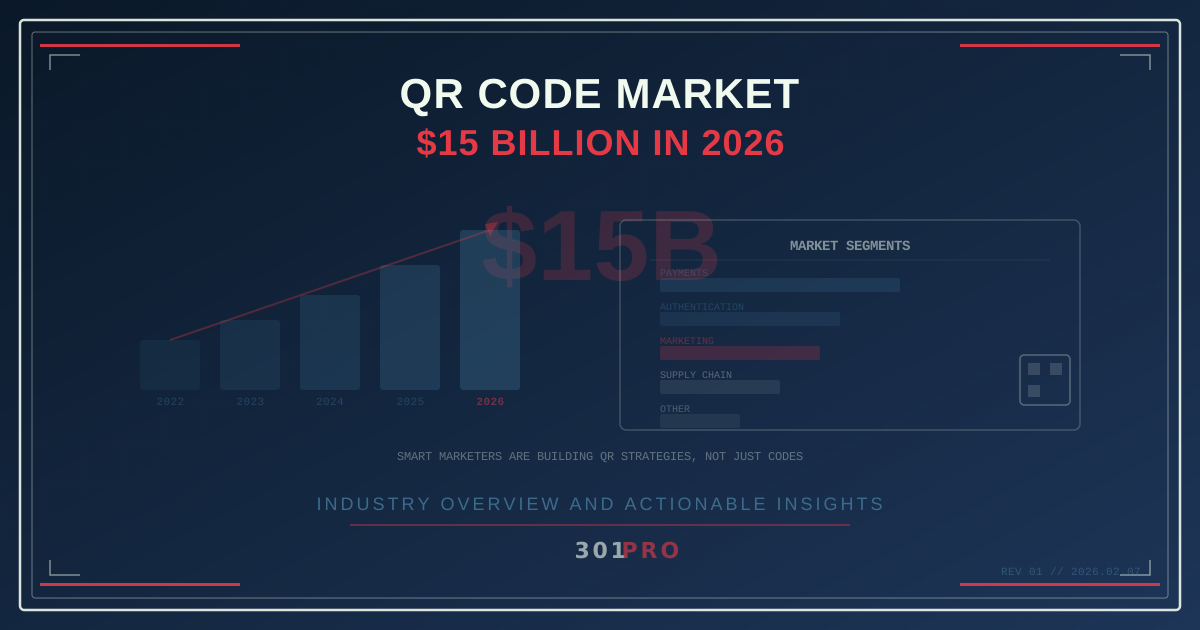
A $15 Billion Market Nobody Saw Coming
In 2019, if you’d told a marketing team that QR codes would become a $15 billion global market by 2026 (Mordor Intelligence pegs it at $15.23B), they would have laughed you out of the room. QR codes were the punchline of digital marketing — that square thing nobody scans, the technology that was “dead on arrival” in the West.
Then a pandemic happened, and every restaurant in America needed a contactless menu. Then Apple built native QR scanning into the iPhone camera. Then Coinbase ran a bouncing QR code during the Super Bowl and crashed their app from the traffic.
Now QR codes are embedded in everything: product packaging, TV commercials, billboards, restaurant tables, event badges, direct mail, retail signage, airline boarding passes, and pharmaceutical packaging. The technology that “nobody uses” is generating billions of scans per year.
But here’s the thing: most of that $15 billion isn’t in the QR code itself. The QR code is free. What’s valuable is the infrastructure around it — the routing, analytics, management, and intelligence layer that turns a static pattern of squares into a measurable marketing channel.
Where the Money Actually Is
The QR code market breaks down into several segments, and understanding them explains where the smart money is flowing:
Payment Systems
The largest slice of the QR code market. In China and Southeast Asia, QR code payments through WeChat Pay and Alipay process trillions of dollars annually. India’s UPI system handles billions of QR-based transactions per month. In the U.S. and Europe, QR payments are growing through Apple Pay, Google Pay, and point-of-sale systems.
Product Authentication
Luxury goods, pharmaceuticals, and food safety are driving demand for QR codes that verify product authenticity. Scan the code, confirm it’s real. This market alone is worth billions as counterfeiting becomes more sophisticated.
Marketing and Advertising
This is where 301.Pro operates. Dynamic QR codes that route to intelligent destinations, track engagement, and provide analytics. This segment is growing fastest because it bridges the gap between physical and digital marketing in a way no other technology can.
Supply Chain and Logistics
QR codes on shipments, pallets, and inventory items for tracking and management. Less glamorous than marketing, but massive in scale.
What Smart Marketers Are Doing Differently
The marketers capturing value from QR codes aren’t just generating static codes and hoping for the best. They’re treating QR codes as a strategic channel with the same rigor they apply to paid search or email marketing.
Here’s what separates the winners from the rest:
1. Dynamic Over Static (Always)
Smart marketers never print static QR codes. Every QR code points to a dynamic short link that can be updated, rerouted, and measured after printing. This turns every physical placement — package, poster, business card — into a permanent, controllable marketing touchpoint.
With 301.Pro, a single QR code can route to different destinations based on time, geography, device, or custom rules. The QR code printed on a product today can serve different campaigns for years.
2. Analytics as a Core Requirement
If you’re not measuring scans, you’re flying blind. Smart marketers track:
- Scan volume by location — which stores, cities, or venues drive the most engagement
- Scan timing — when people scan (morning commute? evening shopping? weekend browsing?)
- Device breakdown — iOS vs. Android, which matters for landing page optimization
- Scan-to-conversion — correlating QR scans with downstream actions
301.Pro’s Intelligent Bot Management ensures these numbers are clean by filtering out bot traffic. When you’re making decisions based on scan data, you need to know the numbers represent real humans, not crawlers.
3. Short URLs for Maximum Scannability
This is a technical detail that separates professionals from amateurs. Short URLs create simpler QR codes with fewer, larger modules. Larger modules scan faster, from further away, and at smaller print sizes.
A URL like 301.pro/cde/spring produces a QR code that scans reliably from 10 feet away on a poster. A URL like www.yourbrand.com/campaigns/spring-2026/landing-page?utm_source=print produces a dense code that barely works at arm’s length.
4. Post-Campaign Routing
Most QR codes outlive their campaigns. The code on a product package sits on shelves for months. The code in a magazine ad lives in that magazine forever. The code in a TV commercial lives on YouTube indefinitely.
Smart marketers configure post-campaign routing: when the promotion ends, the QR code automatically redirects to an evergreen destination instead of a dead page. No wasted impressions. No bad brand experiences.
5. A/B Testing Physical Placements
You can A/B test a QR code’s destination without changing the physical code. Split routing sends 50% of scans to one landing page and 50% to another. This lets marketers test offers, page layouts, and CTAs on physical media — something that used to require printing two different versions.
6. Cross-Channel Attribution
A QR code scan is one of the cleanest attribution signals in marketing. Someone saw your physical media, picked up their phone, and scanned. That’s an intentional action — not a drive-by impression.
Smart marketers are using QR scan data to connect offline media to online conversions. When a scan from a subway poster leads to a purchase 20 minutes later, that’s a direct line from physical ad to revenue. This kind of attribution doesn’t require cookies, pixels, or probabilistic matching. It’s first-party data from a deliberate user action.
The Verticals Leading the Way
Some industries are further ahead than others in their QR code sophistication:
Consumer Packaged Goods (CPG)
Every product is a potential QR touchpoint. Smart CPG brands use QR codes for recipes (on food packaging), usage instructions (on household products), loyalty programs (scan to earn points), and product registration (scan for warranty).
The key insight: a product package gets handled multiple times over its lifetime. Each interaction is a chance for a scan.
Restaurant and Hospitality
Post-pandemic, QR menus became standard. But the smart operators went further: QR codes for ordering, payment, feedback, loyalty signup, and social media follows. A single table tent can drive multiple engagement actions.
Events and Entertainment
QR codes on tickets, badges, signage, and merchandise. Event organizers use dynamic routing to change destinations throughout the event: pre-event, the code goes to the schedule; during the event, to a live feed; post-event, to a survey or content archive.
Real Estate
Property listings with QR codes that route to virtual tours, floor plans, mortgage calculators, or agent contact forms based on time of day and the viewer’s location.
Healthcare
Patient education, medication instructions, appointment scheduling, and portal access. Regulatory compliance makes dynamic QR codes especially valuable — update the destination when guidelines change without reprinting materials.
What’s Next
The QR code market isn’t slowing down. Several trends will push it further:
NFC + QR convergence. More devices support NFC tap-to-link alongside QR scan-to-link. Smart marketers are deploying both on the same placement for maximum reach.
Augmented reality integration. QR codes as entry points for AR experiences — scan a product to see it in your space, scan a poster to watch an interactive preview.
Programmable physical media. The QR code becomes a programmable interface to the physical world. Same printed code, endlessly reconfigurable digital experience behind it.
Enterprise adoption. Internal use cases — equipment maintenance, training materials, safety procedures — are growing as companies realize the same technology works for operations, not just marketing.
The Opportunity
The $15 billion QR code market is still early. Most brands are still using static codes with no analytics, no routing, and no post-campaign strategy. The bar is low.
If you’re already using QR codes, upgrading from static to dynamic is the single highest-ROI move you can make. You get analytics, control, and longevity — all from the same printed code.
If you haven’t started yet, now’s the time. The infrastructure is mature, the consumer behavior is established (everyone knows how to scan a QR code in 2026), and the tools exist to do it properly.
The market hit $15 billion because QR codes work. The question is whether you’re getting your share of that value.