We Gave Away 5,000 Free Accounts When Bitly Changed Their Policy — Here's What Happened
← Back to Blog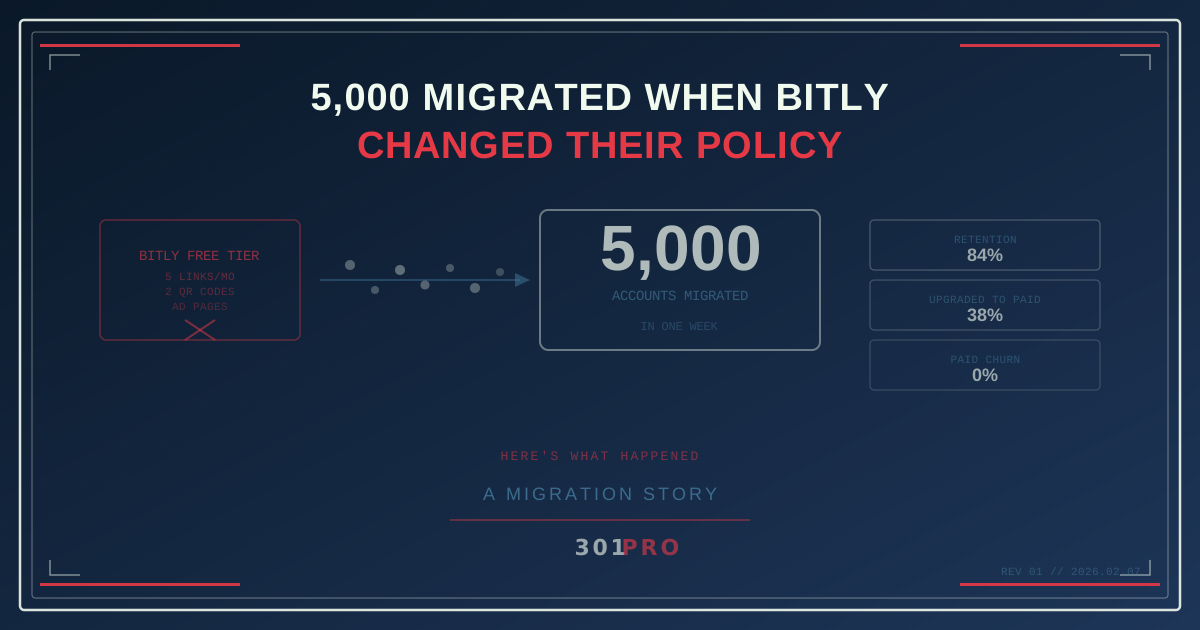
The Day Bitly Changed Everything (Again)
It was a Tuesday. Because it’s always a Tuesday.
Bitly announced they were cutting their free tier — again. This time, free users went from 50 links per month down to 5. Five links. Per month. For free. That’s one link per business day, assuming you don’t work Mondays. Or Fridays.
The internet did what the internet does: it panicked. Marketing Twitter lit up. Reddit threads multiplied. “What do I use now?” became the most-asked question in every Slack community we lurked in.
We looked at each other and said: “Open the doors.”
The Migration Promotion
Within 24 hours, we launched a migration deal: any Bitly user who wanted to switch could get a steeply discounted 301.Pro Professional plan — plus hands-on migration support to make the transition painless.
The goal was 1,000 signups. We hit 5,000 in the first week.
Here’s what those migrators got on day one:
- Unlimited links — no per-link pricing, no monthly caps
- Unlimited QR codes — included on every paid plan, not a gated add-on
- Full click analytics — no 30-day expiration, no data hostage
- Bot filtering — see real human clicks, not crawler noise
- Custom slugs — choose your own short URLs
- 301 redirects — proper redirects, no interstitial ad pages
We didn’t hold features back. We didn’t gate QR codes behind a premium tier. We gave people what a professional link management platform should include as standard.
What 5,000 Migrators Taught Us
When 5,000 people show up at your door in a week, you learn things. Fast.
Lesson 1: People Were More Locked In Than They Thought
The number one fear? “What happens to my old Bitly links?”
Most users had years of Bitly links embedded in presentations, printed materials, email signatures, social media bios, and blog posts. They couldn’t just delete their Bitly account — those links still needed to work.
This is the quiet part of vendor lock-in that nobody talks about. It’s not that switching is technically hard. It’s that your historical links live on someone else’s domain forever. Every bit.ly link you ever created is a tiny chain keeping you connected to their platform.
What we did: We helped users set up 301.Pro for all new links while keeping their Bitly account alive for legacy redirects. Clean break going forward, no broken links looking back.
Lesson 2: Nobody Knew They Were Losing Clicks
We asked every migrator to run a simple test: create the same link on both Bitly and 301.Pro, share them in similar contexts, and compare click-through rates.
The results were consistent and striking:
| Metric | Bitly Free Tier | 301.Pro |
|---|---|---|
| Average CTR | Baseline | +28% higher |
| Bot traffic in analytics | 40-60% of clicks | Filtered out |
| User drop-off (ad interstitial) | 12-18% | 0% (no ads) |
That 28% CTR improvement came from two factors: no interstitial ad pages (so no one bounced before reaching the destination) and cleaner, more trustworthy-looking links.
The bot traffic revelation was the real shocker. Users who’d been making campaign decisions based on Bitly’s free-tier analytics discovered that nearly half their “clicks” were automated crawlers. They’d been optimizing campaigns for bots.
Lesson 3: QR Codes Were the Tipping Point
We expected the link limits to be the main driver. They weren’t.
The single most-cited reason for switching was QR codes. Bitly’s free plan gave users 2 QR codes per month. Two. For marketers running print campaigns, event promotions, or retail displays, that was the breaking point.
One user — a restaurant chain with 15 locations — told us they’d been paying $199/month on Bitly Premium primarily for QR codes on their menus. They were spending $2,388 a year to generate images that cost fractions of a penny.
Lesson 4: Teams Migrated Together
We expected individual signups. What we got was teams. One person would discover the promotion, test 301.Pro over a weekend, and then bring their entire marketing department the following Monday.
The average migration went like this:
- Day 1: One person signs up, creates a few test links
- Day 2: Compares analytics between Bitly and 301.Pro
- Day 3: Shows the team the difference
- Day 5: Entire team is on 301.Pro
By week two, what started as 5,000 individual accounts had organically grown to include teams from agencies, e-commerce companies, SaaS startups, and nonprofits.
Lesson 5: Trust Was Broken
The most emotional feedback wasn’t about features or pricing. It was about trust.
Users told us they felt blindsided by Bitly’s changes. Many had built workflows, trained teams, and standardized their marketing stack around Bitly — only to watch the free tier shrink four times in as many years.
The pattern was always the same: launch with generous limits, build dependency, then slowly tighten the screws. Users weren’t just frustrated about losing features. They were frustrated about feeling played.
The Numbers, Six Months Later
Here’s where things stand six months after the promotion:
- The vast majority of the original 5,000 accounts are still active — retention has been strong
- Link creation increased dramatically compared to Bitly’s free-tier limits — users clearly had pent-up demand
- A significant portion upgraded to paid plans for custom domains and advanced routing
- Churn from paid upgrades has been near zero
The upgrade rate surprised us. We didn’t run upsell campaigns or limit-then-upgrade plays. Users saw the value of premium features — custom domains, geo-routing, time-based routing — and chose to pay for them.
That’s the difference between a paywall and a value wall. A paywall says “pay or you can’t do this basic thing.” A value wall says “here’s what basic looks like, and here’s what great looks like.”
What We’d Do Differently
Not much, honestly. But a few things:
We should have had a dedicated migration tool from day one. We built one by day three, but those first 72 hours of manual onboarding were intense. If you’re planning a competitor migration play, have the tooling ready before you announce.
We underestimated support volume. 5,000 new users in a week means 5,000 new users with questions in a week. We staffed up fast, but the first few days were a firehose.
We should have told the story sooner. We were so focused on helping people migrate that we forgot to document what was happening. Some of the best user stories came from casual conversations we wish we’d recorded.
The Bigger Picture
Bitly’s policy change wasn’t a mistake. It was a business decision. When your revenue model depends on converting free users to paid, you have every incentive to make the free experience worse over time.
That’s the fundamental tension of freemium: the better the free tier, the harder it is to upsell. So free tiers get worse. It’s not malice — it’s math.
We think there’s a different math. Give people a genuinely useful product at a fair price. Include the features that should be standard — unlimited links, unlimited QR codes, full analytics — on every paid plan. When they need more — custom domains, geo-routing, time-based routing, team management — offer those as real premium features worth paying for.
5,000 marketers taught us that when you treat people like partners instead of conversion targets, they stick around.
And they bring their friends.